
Design limits and practical constraints
Market gear has to work hard. It must fit in a hatchback, survive being moved in and out of storage, and still look sharp after a few weekends in salty air. Strand can be humid, and any untreated or poorly finished timber starts to show it quickly, so we planned the build around sealed surfaces and edges that would not soak up moisture.
We also had to keep the pieces light enough for one person to carry, while making sure they would not tip over when the wind picked up. The client asked for a natural wood look with clear branding, but no glossy finish that would show fingerprints or glare under bright morning sun. The display also needed to suit a stall that changes layout from one event to the next, so the boards had to be modular rather than fixed in one set format.
- Flat-pack format for easy transport
- Low glare finish for outdoor use
- Stable enough for windy market conditions
What we made for the stall
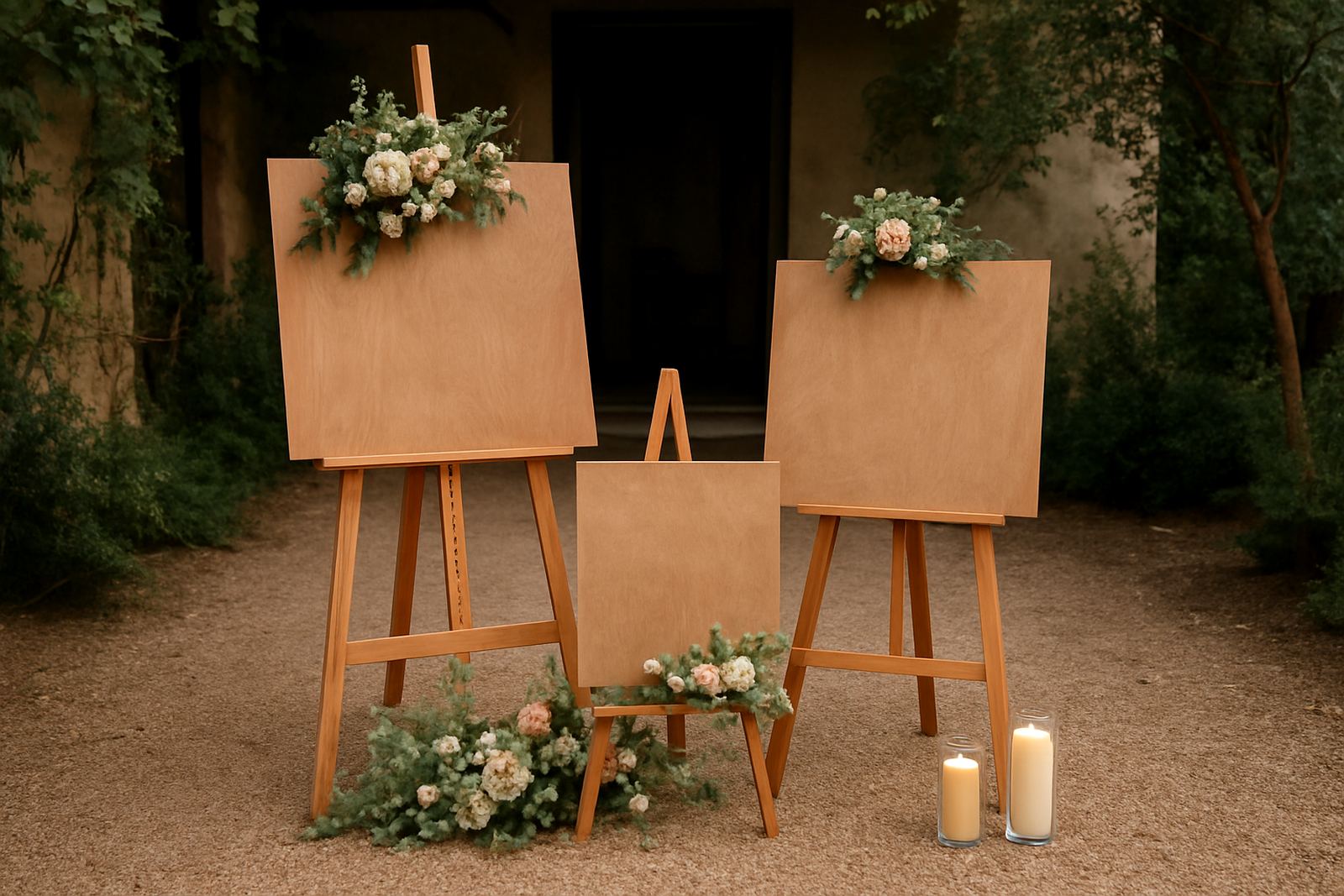
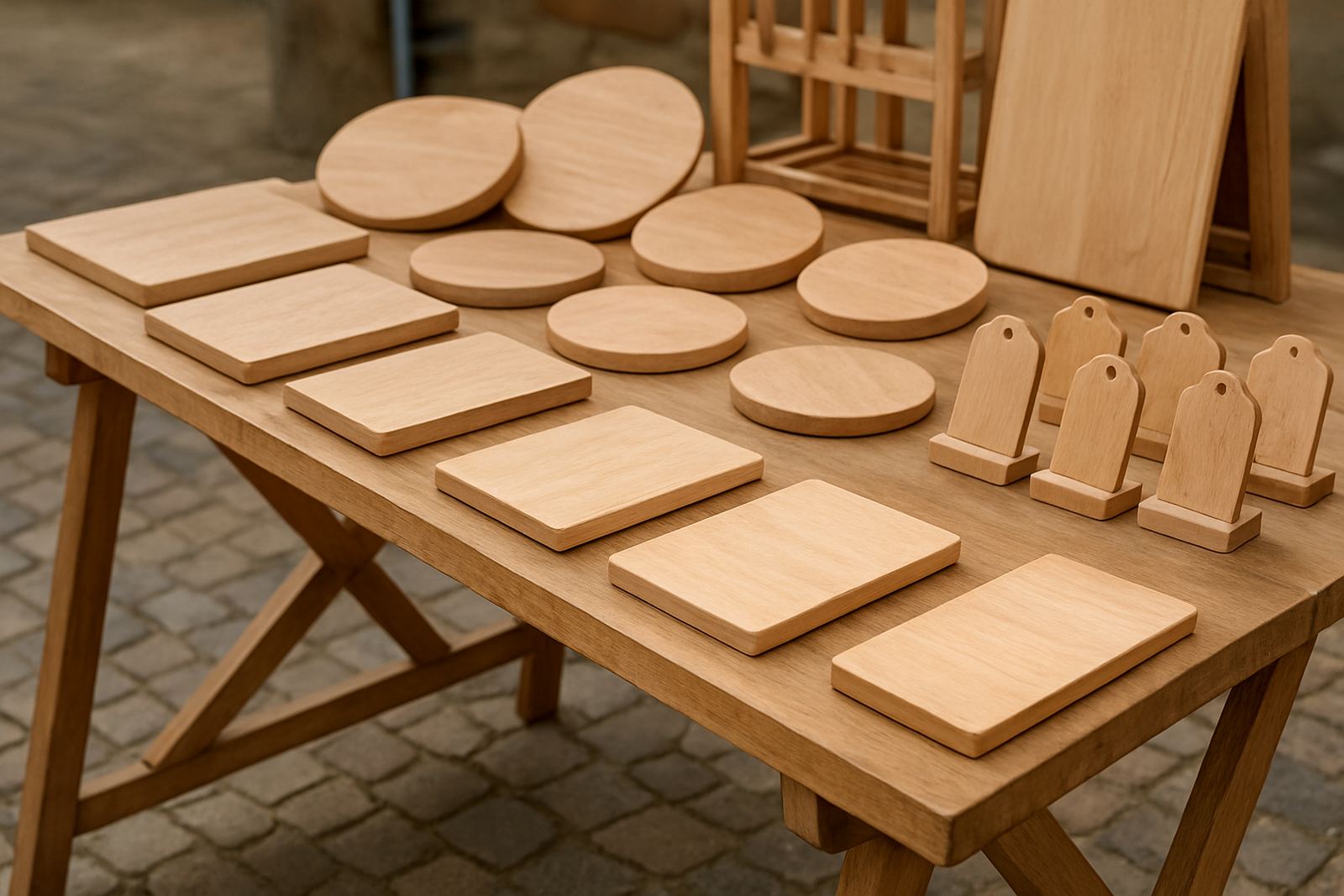
We produced a matching set of laser-cut wooden display pieces in layered timber, cut to clean edges and finished for repeated use. The main boards were made in a compact upright format with slotted bases, so they could stand securely on a trestle table without extra hardware. We added branded header panels and smaller accessory pieces that could be moved around depending on stock levels.
The price tags were cut from thin timber with enough space for a marker pen or chalk pen style fill-in. That made it easier for the trader to update prices on the spot instead of reprinting labels every week. The stand accessories included small product risers and branded markers that helped divide the table into sections, which is useful when you are selling more than one product line and want the eye to move neatly across the setup.
- Main display boards: approximately 600 mm high x 300 mm wide
- Price tags: compact, writable and reusable
- Accessory risers: lightweight, stackable and easy to pack
How the production ran over two weeks
The full job took two weeks from first brief to final dispatch. In week one, Marli worked through the layout with the client, checking what information needed to be shown on the boards and how much space each price tag would need. Once the wording and sizes were approved, Shailen cut the parts on our laser machines and Ruan handled the sanding, sealing and edge finishing.
In week two, we assembled the sample set, checked stability on a table similar to the client’s stall setup, and adjusted a few joins so the pieces locked together with less movement. Leah then packed everything for courier delivery with protective wrapping between the boards so the edges stayed neat in transit. Lesedi kept the client updated through the process and made sure the final pack matched the trading style they wanted.
- Week 1: brief, measurements and design approval
- Week 1 to 2: cutting, sanding, sealing and test assembly
- Week 2: packing and courier dispatch
Results on market day
The finished setup gave the stall a more ordered and professional look straight away. The display boards created height, the price tags made the stock easier to scan and the branded accessories helped the table feel like one complete unit instead of a mix of loose items. For a trader working in Strand, that matters because customers often decide quickly while walking past, especially when there are several stalls trading side by side.
The client also found the kit quicker to set up and quicker to pack down. That saved time at both ends of the day and reduced the number of small items getting lost in the vehicle. Because the pieces were made with a durable finish and sealed edges, the trader could use them week after week without worrying about moisture damage or the timber lifting at the corners. Small detail, but it makes a real difference when you are setting up at 5 am and trying to get the kettle on before the first customers arrive.
What we would do again for a similar stall
If we were repeating this project for another Strand or Helderberg trader, we would keep the same flat-pack approach and build in the option to add more panels later. Market traders often start with a small range and then expand, so a modular system saves money and keeps the visual style consistent. We would also keep the price tags writable rather than fixed, because that gives more flexibility across seasonal specials and changing stock.
For future stall builds, we would continue to use sealed timber and a finish suited to coastal conditions, especially if the gear will be stored in a garage or shed near the sea. We would also plan for one person handling the full setup, because that is the reality for many small traders. A display that looks good but takes two people and a tool box is not much use on a busy market morning.
- Keep the layout modular for future add-ons
- Use writable tags for easy price changes
- Plan for one-person setup and pack down
Key facts
| Client type | Local trader at market stalls |
|---|---|
| Town | Strand |
| Project scope | Portable display boards, price tags and branded stand accessories |
| Materials | Laser-cut timber with sealed edges and finished surfaces |
| Lead time | 2 weeks from brief to dispatch |
| Delivery | Courier packed from Somerset West to Strand |