
Why wooden items need more than a loose wrap
Laser-cut wood is light, but that does not make it easy to ship. A sign can chip on a corner, a layered name can split at a joint, and a hanging piece can rub through its finish if it moves around inside the parcel. Courier networks move parcels through depots, conveyors and delivery vans, so packing has to deal with pressure from all sides, not only the front.
In Somerset West we see the same issues again and again with deliveries to Stellenbosch, Cape Town, Paarl and Hermanus. A parcel might leave a dry workshop and spend the day in a warm van or a cool coastal depot. That change in temperature and humidity can affect timber, paint and glue if the item is not sealed and packed properly.
Good courier packing is not about using the most packaging. It is about choosing the right packing for the object, the route and the handling it is likely to face.
How we prepare signs before they go into a box
Before a sign is packed, each piece is checked for loose edges, lifting paint and fittings that could work themselves free in transit. If the item has layered elements, those layers are secured so they cannot shift. Small hardware is bagged and labelled separately, then attached to the main parcel or placed in a marked inner packet so nothing goes missing.
- Sharp corners are protected with edge guards or folded board.
- Faces are covered with a soft interleaf to stop scuff marks.
- Raised lettering is stabilised so it cannot press against the lid.
- Mounting hardware is separated from the finish to prevent scratches.
For assembled decor, we also check weak points like thin stems, narrow frames and hanging loops. If a part is likely to flex, it gets support before boxing. That extra minute saves a lot of repair work later.
The packing build that works for nationwide couriering
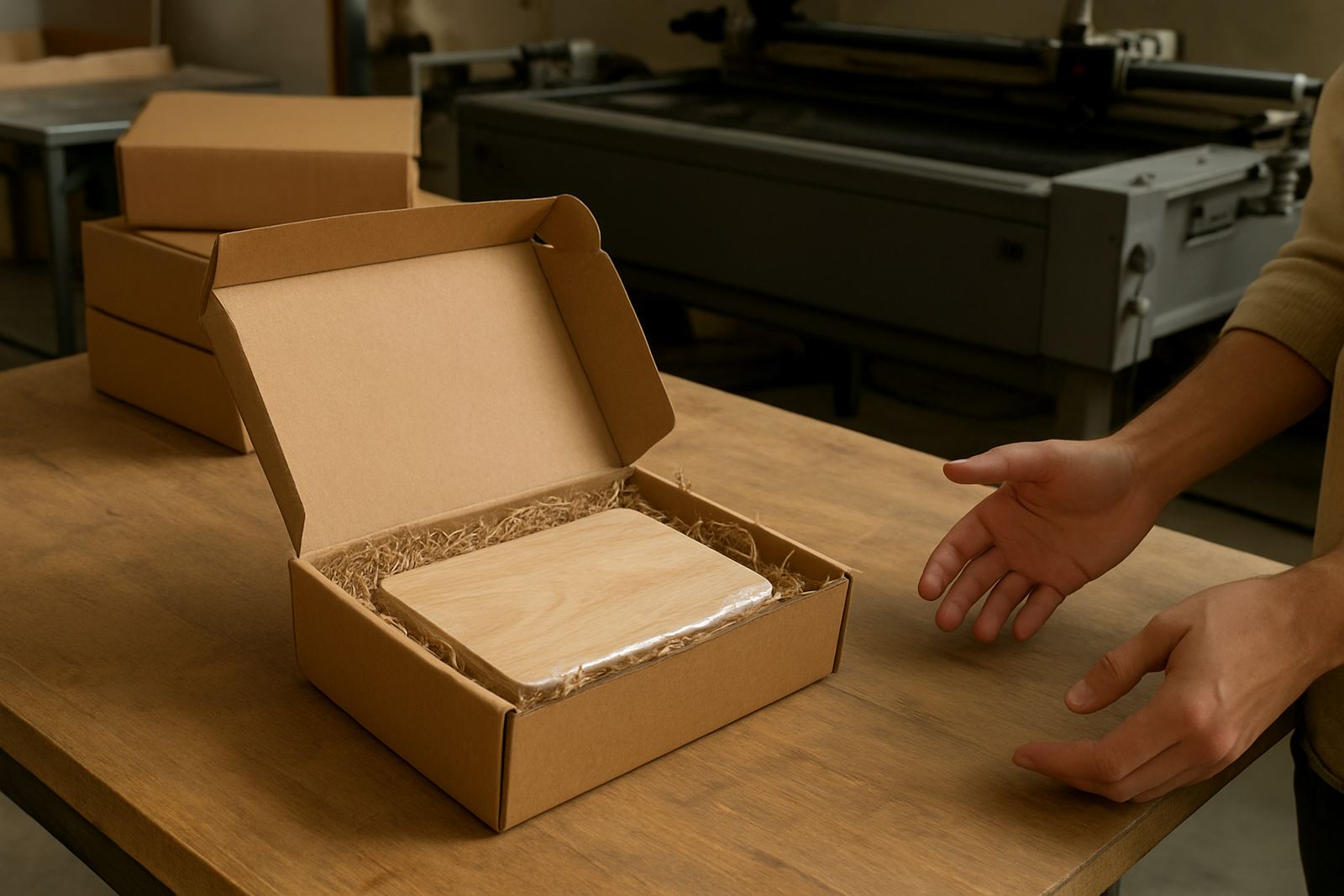
A safe pack usually has three layers. The first is the protective layer directly on the product. The second is the internal support that stops movement. The third is the outer carton or crate that handles impact from handling and stacking.
For smaller gifts, a double-walled box with tight internal packing often does the job. For larger signs, especially those with cut-out sections or fine lettering, we may use reinforced board, foam spacers and a snug outer carton sized to the item. Oversized boxes are risky because empty space lets the parcel move. A box that is too tight can press on details and crack a painted edge.
- Use firm packing that fills voids without crushing the item.
- Keep the sign centred so impact is absorbed by the packing, not the wood.
- Seal every seam with strong tape, including the base.
- Mark the parcel clearly if it must stay upright.
For coastal deliveries to places like Hermanus and Strand, we also think about moisture. A parcel may travel through humid air and cold morning conditions in the same day, so we avoid packing that traps damp against the wood. A dry pack is essential.
Common mistakes that cause damage
Most courier damage is preventable. The problem is usually not the courier itself, but a parcel that was packed as if it would never be turned, stacked or dropped a short distance. Wood can seem forgiving until a corner catches the floor or a layered section is pushed sideways.
- Wrapping a sign in thin plastic only, with no rigid support.
- Leaving bolts, hooks or plaques loose inside the box.
- Using a box that is much larger than the product.
- Letting painted faces rub directly against cardboard.
- Sending a fully assembled item when it would be safer in parts.
We often advise clients to split a large decor order into smaller parcels if that lowers risk. It can cost a little more in packing and courier fees, but it is better than replacing a damaged piece after delivery. Nobody wants a wedding sign arriving with a chipped corner two days before the event.
A Somerset West example: wedding signage to Hermanus
A recent example involved a wedding order heading from Somerset West to Hermanus. The set included a welcome sign, table markers and a layered name piece for the reception. The route meant exposure to road vibration, salt air near the coast and a tight event deadline, so the packing had to be exact.
Each item was wrapped individually, then separated with rigid boards so the faces could not touch. The layered name was fixed in place with internal spacers and the smaller table markers were grouped in a compartmented inner box. The final carton was sealed, labelled and packed so it could be lifted without pressing on the top surface.
The result was simple: the client unpacked clean items with no edge wear and no shifting layers. That is the standard we aim for on every order, whether it is going to Cape Town, Paarl or a farm venue outside Stellenbosch.
What clients should tell us before dispatch
The best packing plan starts with the right information. A sign for a shop counter needs different protection from a decor set for a wedding venue or a corporate gift box. If we know the final destination, the deadline and whether the parcel will sit in a storeroom before use, we can pack it with that journey in mind.
Useful details to share through the enquiry form include the item size, finish, destination town, and whether the parcel will be handled by a venue team or stored until the event day. If the order is going to a coastal area, a remote address or a place with limited receiving hours, that affects the packing choice too.
- Tell us if the item is fragile, painted or assembled.
- Say whether it needs to arrive event-ready or can be assembled on site.
- Let us know if the parcel must fit through a narrow entrance or small counter space.
- Share the delivery town so the pack suits the route and climate.
Courier safe packing is part of the product, not an afterthought. When the packaging is planned properly, the item arrives ready to place, hang or hand over with less stress for everyone involved.