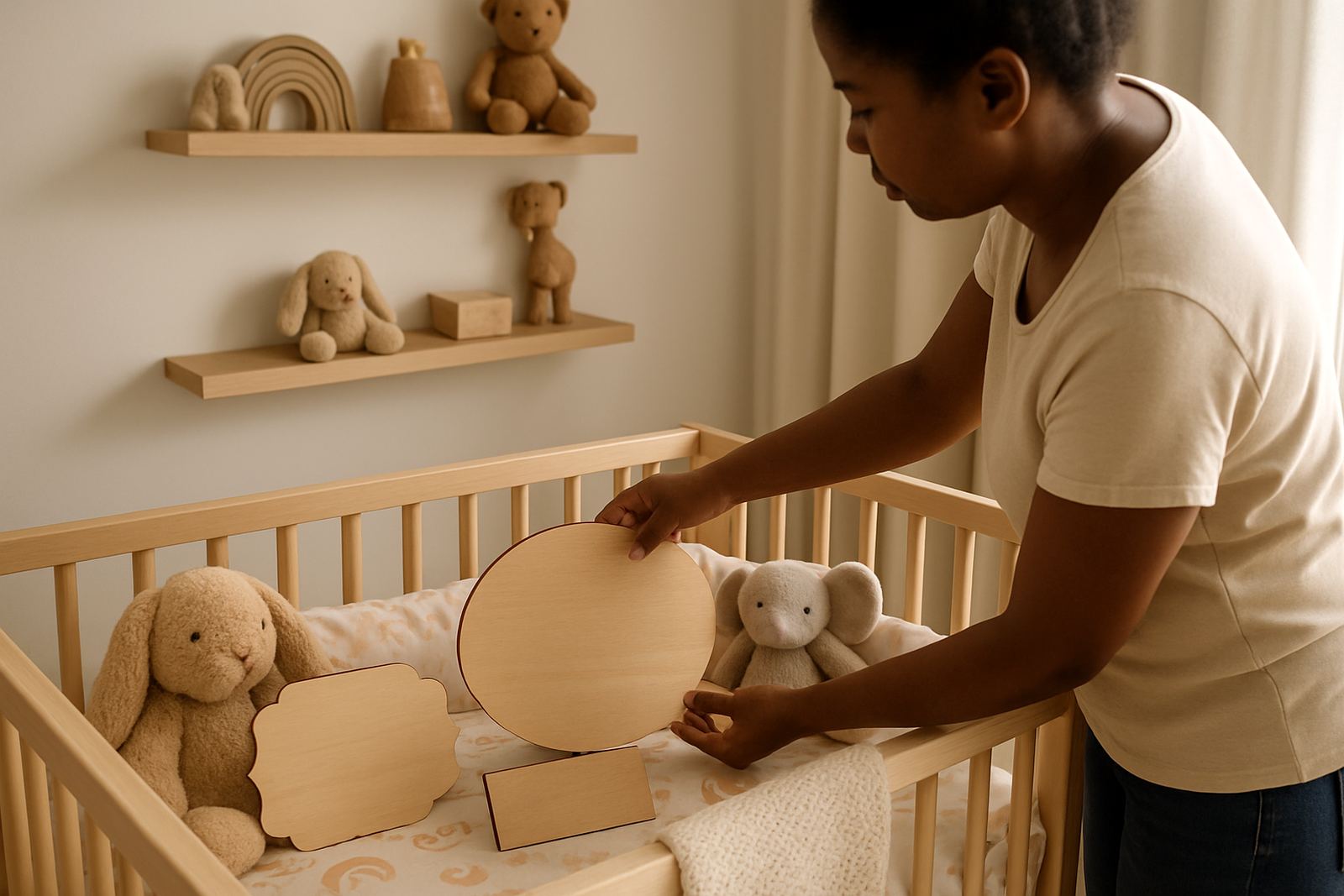
Why nursery name signs are moving toward softer, calmer designs
Nursery signs used to be quite busy, with bright colours and lots of detail packed into a small space. The current trend is more restrained. Parents are asking for designs that feel gentle in a baby room, sit well with natural timber furniture and do not clash with curtains, bedding or wall paint. In Somerset West and across the Western Cape, that usually means soft shapes, rounded lettering and finishes that let the wood show through.
There is a practical side too. A name sign on a nursery wall should be easy to read from the door, simple to dust and light enough for safe mounting. If the room is going through a lot of use, think about nappy changes, toys and changing storage, a design that is too delicate can become a frustration. Cleaner forms tend to age better and suit children long after the newborn stage.
For homes near the coast, like Strand, Gordon's Bay and Hermanus, the finish matters as much as the style. Humidity can affect lower quality timber and adhesives, so a well sealed sign with a neat backing board usually performs better than something overly thin or heavily layered with weak joins.
Layered wood is still the favourite, but less is more
Layered wood signs remain one of the strongest nursery trends because they add depth without needing paint or bright decoration. The look is warm and personal, and it works for surname signs, first names or short welcome pieces. The best versions use 2 or 3 layers only, so the name stands out clearly but does not feel heavy on the wall.
In practical terms, layered work should also be planned for the room size. A long name in a small nursery can become crowded if the layers are too thick or the backing board is too narrow. For example, a nursery in Stellenbosch with a compact corner wall may suit a neat 40 cm sign, while a larger room in Paarl or Durbanville can carry a wider statement piece above a cot or chest of drawers.
- Choose 2 or 3 layers for a clean, modern look.
- Keep the profile slim so it does not project too far from the wall.
- Use clear spacing between letters for easy reading.
- Match the stain or paint tone to the room, not to a trend.
Neutral natural finishes work across boys, girls and shared rooms
Neutral finishes are not a compromise, they are often the most usable choice. Natural oak tones, pale timber shades, whitewashed wood and muted beige or grey details sit comfortably in a room with mixed textiles and changing decor. Families also like this approach because the sign can stay up when the nursery becomes a playroom or early learner space.
A neutral finish also suits gift buyers who do not know the exact colour scheme. If you are ordering for a baby shower in Cape Town or sending a gift to Hermanus by courier, a natural finish gives you a better chance of matching the home. It feels considered without being tied to a single theme like animals, clouds or a specific colour block.
Here is the key point: neutral does not mean plain. A good sign can still have a soft arch, scalloped edge or engraved detail, just without visual noise. That balance is what makes the style so popular with modern parents.
Fonts and shapes that suit nursery walls
The right font changes everything. For nursery name trends, rounded letterforms and gentle handwritten styles are usually preferred because they feel calm and are easier to read at a glance. Very thin script can look elegant in a mock-up, but on the wall it may lose clarity or become fragile during handling and cleaning.
Shapes matter as well. Arches, circles, soft clouds and simple plaques are currently more popular than sharp rectangles. Rounded shapes help the sign feel child friendly and also reduce the hard edges that can dominate a small room. If the room has a sloped ceiling, fitted shelving or patterned wallpaper, a curved shape often sits better in the space.
- Use a font with enough thickness for safe cutting and good visibility.
- Avoid overcrowding when the name is long or has double initials.
- Keep decorative elements simple so the name remains the main focus.
- Ask for a proof size before production if the wall area is limited.
What parents in the Western Cape are asking for now
In Somerset West and surrounding towns, many nursery orders are moving toward pieces that do more than sit on a wall. Parents want signs that can move from nursery to playroom, from baby shower display to first birthday table, and still look appropriate. This is where practical custom work helps, because a design can be scaled for a wall, a shelf or a gift hamper insert without losing its character.
There is also growing interest in matching sets. A name sign, milestone markers and a simple door plaque in the same wood tone can create a tidy, consistent look without requiring a full theme. For busy families, that consistency makes decorating easier and keeps the room calm. It also means the sign does not have to be replaced every time the bedding changes.
A local example would be a family in Gordon's Bay fitting out a bright room with white walls, woven storage baskets and pale timber furniture. A soft arch sign in natural wood with the baby’s first name and a slim backing board would work well there because it ties the whole room together without taking attention away from the rest of the space.
Ordering a nursery sign that lasts past the baby stage
When ordering a nursery name sign, think beyond the first photo. The piece should suit the home, the child and the mounting position. Ask about the size, timber thickness, edge finish and how it will be packed for courier delivery if it is going to Cape Town, Paarl, Stellenbosch or further afield. A sign that arrives well protected is far less likely to bend, chip or arrive with damaged lettering.
It is also worth considering where it will live once the cot is moved or the room changes. Some families keep the same sign for years by choosing a neutral finish and a style that is not overly babyish. That can save money and keep the room feeling current without replacing wall decor every few months. If you are buying for a gift, this approach is safer too because it suits a wider range of homes.
For best results, measure the wall carefully, decide whether the sign is for a door, shelf or main feature wall, and confirm the spelling before production. A small mistake can be costly on a personalised piece and the wording needs to be right first time, especially when the sign is travelling by courier and going straight into a newborn room.
A practical style guide for choosing the right look
If you are trying to choose from the latest nursery name trends, start with the room rather than the catalogue idea. A sign should suit the colour of the walls, the size of the space and the furniture already in place. That practical approach usually leads to a better result than chasing a style that looks good online but feels out of place at home.
- Choose layered wood for depth, but keep the build slim.
- Use neutral natural finishes for flexibility and long term use.
- Pick soft shapes for smaller rooms and gentle interiors.
- Make readability the first test, then add decorative detail.
- For coastal homes, ask for a finish that handles humidity well.
The trend is not really about being minimal for the sake of it. It is about making nursery decor calmer, easier to live with and more personal. That is why layered wood, soft shapes and natural finishes are likely to stay popular for a long time.