
Start with the wall, not the logo file
Before we cut anything, we look at the wall where the sign will live. Measure the available width and height, then note what sits around it such as a reception counter, shelving, glass, light fittings or a security gate. A sign that looks perfect on screen can feel too small once it is mounted above a busy counter, or too large for a narrow passage wall.
For small retail interiors, the best signs usually leave breathing room around the logo. As a rule, allow at least 150 to 300 mm of clear space on each side if the wall allows it. In reception areas, the sign should be visible from the entrance without forcing the eye to hunt for it. If you are planning for a double-volume foyer or a long shop wall, ask us to size the sign for the viewing distance, not just the wall opening.
- Measure wall width, height and the usable space around fittings
- Check viewing distance from the entrance or waiting area
- Note if the wall is painted, tiled, plastered or glass nearby
- Tell us if the sign must fit between shelves, frames or lights
Choose the right wooden build for the space
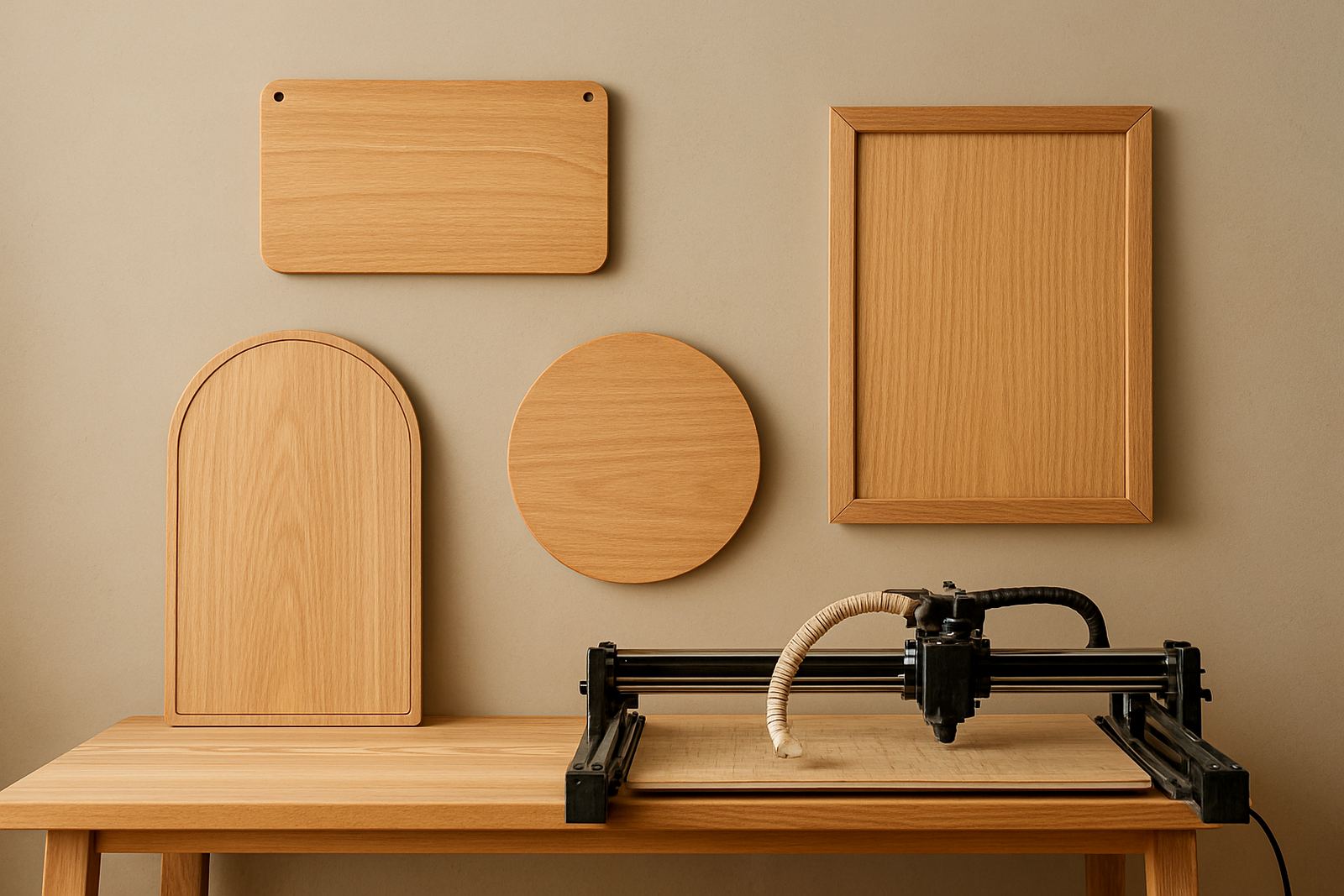
Not every logo sign needs the same build. A flat engraved panel works well where the branding is simple and the wall already has texture. Layered signs suit receptions and studios because the raised elements cast a small shadow and give the logo more presence. For a shop interior, a layered build can also help the sign stand out under warm downlights or natural light from the front windows.
The timber look matters too. Lighter tones work well in bright interiors and coastal towns such as Somerset West, Strand and Hermanus where humidity can affect finishes if the material is not sealed properly. Darker stains suit formal offices, legal practices and corporate waiting areas. If the sign will hang near a window or in a sunlit space, we usually recommend a finish that helps protect the surface from fading and day to day cleaning.
- Flat engraved signs for simple branding and smaller budgets
- Layered signs for reception walls and stronger visual impact
- Sealed finishes for humid areas and coastal interiors
- Colour choices that match floors, counters and wall paint
Prepare the artwork so the cut is clean
Good artwork saves time and gives a cleaner result. We need a high quality logo file with clear shapes, readable text and no fuzzy edges. Thin lettering can be difficult to cut in wood, especially on smaller signs, so it helps to check whether any part of the logo needs simplifying. If the logo has tiny lines, fine gaps or overlapping pieces, we may suggest adjustments so the final sign stays strong and easy to clean.
If your business uses more than one version of the logo, send the version that is used most often on your stationery or shop front. That keeps the sign consistent with the rest of your branding. For a new venture or a redesign, we can also work from a sketch or a photo reference and discuss how much detail will carry through well at full size.
- Send a clean logo file with sharp edges
- Check that small text is still legible when scaled up
- Let us know if the sign must match an existing brand style
- Ask for a prototype sample if the layout is being tested
Think through fixing, weight and wall type
The best logo sign is only as good as the way it is fixed. A lightweight sign on a solid painted wall can be mounted neatly and flush. Heavier layered signs, or signs with larger spans, may need hidden spacers or stronger fixing points. This matters in older buildings, in plasterboard partitions and in retail spaces where the wall surface may not take load evenly. We also look at whether the sign needs to be removed later for repainting, relocation or tenant handover.
For businesses in Cape Town, Paarl or Durbanville, where tenant rules and landlord requirements can vary, it helps to know from the start if the sign must be removable without leaving major marks. In some cases the wall can be prepared for a cleaner installation, but it is better to plan that before production than after the sign is finished.
- Tell us whether the wall is solid, plasterboard, tiled or glass nearby
- Confirm if the sign should be removable later
- Allow for the sign weight and the fixing method
- Check building or landlord rules before installation
Match the finish to the room and the light
Wooden signs can look very different depending on the light. A matt finish suits understated interiors and reduces glare in bright rooms. A satin finish often gives a warmer result for receptions and boutique shops. If the room has strong sunlight, reflective glass or many spotlights, a finish that cuts glare will usually read better from the customer side of the counter.
We also consider the practical side. Receptions and retail areas get dust, fingerprints and the occasional splash from cleaning products. The finish should be easy to wipe without damaging the wood or the lettering. In coastal areas, or spaces with regular air conditioning and open doors, sealed edges help keep the sign looking tidy over time.
- Matt for low glare and understated spaces
- Satin for warm, visible branding in receptions
- Sealed edges for cleaning and coastal humidity
- Lighting position checked before final finish is chosen
Order timing for events, openings and fit-outs
Lead time matters when a sign is part of a launch, office move or shop refit. If you need the sign for a soft opening, wedding setup, tenant inspection or brand reveal, share the date early. That gives time for design checks, material selection, cutting, finishing and courier packing. For bulk orders or multiple pieces, we also plan dispatch so each item arrives labelled and ready for the right site.
Western Cape orders can often be arranged for local delivery to Somerset West, Stellenbosch, Cape Town, Paarl, Hermanus, Gordon's Bay, Strand and Durbanville, while nationwide courier options are available too. For business clients, this is useful when a head office wants the same logo sign in more than one branch or when a contractor is fitting out several sites at once.
- Share the installation date as early as possible
- Allow extra time for approvals on new artwork
- Group branch orders together where possible
- Confirm who will receive the parcel on site
A practical checklist before ordering a logo sign
Once the wall, artwork and finish are sorted, a short checklist keeps things on track. It helps avoid delays and makes sure the final sign suits the room it is going into. Our team at the Somerset West base works through design, production, finishing and dispatch in sequence, so clear information at the start saves time later.
Use this checklist before sending your enquiry through the contact page. If you are unsure about any item, we can talk it through and suggest the most suitable build for the space. That is often the quickest way to avoid a sign that is too small, too busy or not practical for the wall it is meant for.
- Wall measurements and a photo of the space
- Logo file or clear reference image
- Preferred size, colour and finish
- Install date or delivery deadline
- Any site rules, access issues or removal requirements
With the right planning, a wooden logo sign becomes part of the room, not just something added to it. It can support the customer experience from the first glance at reception to the final detail at checkout, and it should still look good after regular use.