
Start With the Wall and the Viewing Distance
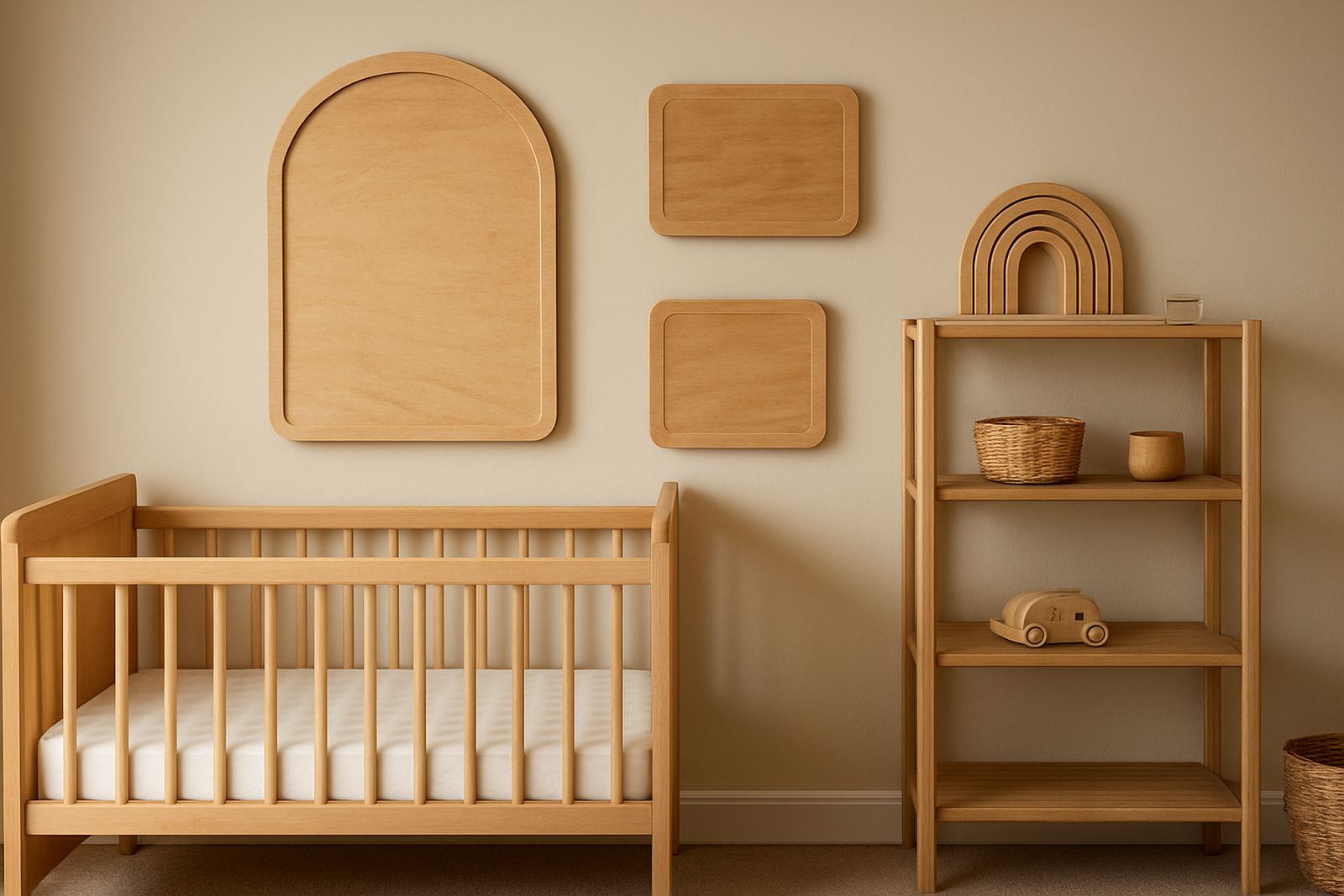
Before you choose fonts or colours, look at the wall where the sign will hang. A sign above a cot, dresser or reading corner needs to read clearly from the doorway and still feel balanced at close range. In smaller rooms, a sign that is too wide can crowd the wall, while one that is too small disappears once the cot, curtains and shelves are in place.
As a rough guide, most nursery signs work well at 500 mm to 900 mm wide. A short name such as Mia or Theo can sit comfortably in a smaller format, while a longer name often needs more width or a two line layout. If the wall is textured, painted with a dark colour, or has strong sunlight from a west facing window, keep the lettering simple and legible.
- Measure the available wall width in millimetres.
- Leave at least 150 mm clearance on either side where possible.
- Check where lights, shelves and curtain rods sit before finalising the size.
- For longer names, consider a stacked layout rather than shrinking the text too far.
Choose Layering That Suits the Room
Layered signs add depth and help the name stand out without needing bright colours. A simple base layer with a raised name layer is usually enough for a nursery. More layers can be lovely, but too many can make the piece feel busy especially if the room already has patterned wallpaper, busy bedding or several framed prints.
Wood suits nursery signs very well because it gives a softer look than hard gloss finishes. A pale timber base with a darker name layer is easy to read, while a painted base with natural wood lettering can feel warmer in a coastal home where humidity is part of daily life. For homes in Somerset West, Strand or Gordon's Bay, a clean sealed finish helps keep the sign looking neat through changing weather and open windows.
- Two layers are often enough for a clean nursery look.
- Use stronger contrast if the wall colour is pale grey, sage, blush or cream.
- Choose sealed edges for better durability in coastal areas.
- Keep extra decorative elements light if the sign will hang above the cot.
If you want a sign to match a specific room theme, bring through one or two details only. A few stars, clouds, leaves or gentle curves usually work better than loading the whole piece with motifs.
Pick a Tone That Will Age Well
Nursery trends change quickly, but a sign often stays in the room for years. Soft neutrals, muted greens, warm timber tones and dusty pastels tend to age better than highly themed colours. If the room will later become a toddler room, it helps to choose a design that can move with the child rather than locking into a very specific baby style.
Think about how the sign will pair with the rest of the room. White and natural wood are calm and versatile. Gentle grey works well with both modern and classic interiors. If you want colour, keep it grounded and avoid shades that clash with wall paint, curtains or a feature wallpaper. A sign that matches the room too closely can disappear, so it still needs enough contrast to stand out.
- Choose 1 main colour and 1 accent colour at most.
- Test the colour against the wall in daylight and at night.
- Avoid very shiny finishes if the sign will sit near a lamp or window.
- For a shared room, keep the tone neutral enough to suit both children.
Placement Rules for Safety and Balance
Good placement is about both appearance and safety. A nursery sign should be visible but out of the way of hands, cords and moving furniture. The most common spot is above the cot or above a dresser, but the final position depends on ceiling height, wall space and where the child will spend most of the time. In homes where load-shedding means lamps or emergency lights are used often, it is worth checking how shadows fall at night so the sign remains easy to see.
Leave enough space around the sign so it does not sit too close to a curtain rail, aircon unit or shelving. If the room has a busy wall, place the sign on the calmest section possible. For rentals or spaces where drilling is limited, ask about fixing options that suit your wall surface and the weight of the sign.
- Place the sign high enough to stay clear of little hands.
- Keep it away from direct heat, steam and damp patches.
- Check that hanging hardware suits plastered, painted or brick walls.
- Make sure the sign will not block a night light or camera view.
A quick tape mock up on the wall can help confirm the height before final fitting. Step back from the doorway and look at it from the angle you use most often.
What to Include in Your Order Brief
A clear brief saves time and helps the finished sign match the room. Start with the exact name spelling and the layout you want. If there is a second line, such as a middle name or a small phrase, say where it should sit. Send the wall colour, room theme and any inspiration images that show the style you like. If the nursery is for a baby shower or naming ceremony, include the date you need it by so production and courier packing can be planned properly.
It also helps to mention whether the sign is for indoor use only, whether it will hang or stand, and whether the room is coastal or inland. Durbanville, Paarl and Stellenbosch homes may have very different wall colours and room sizes, while Cape Town apartments often need a slimmer format with lighter mounting hardware.
- Exact name spelling and capital letters, if any.
- Preferred width or wall space available.
- Room colours, theme and any matching items.
- Preferred finish: natural wood, painted, layered or mixed.
- Delivery town and event date if you need courier packing.
Final Check Before You Approve the Design
Before production starts, check the practical details one more time. Read the name carefully, confirm the size against the wall measurements and make sure the tone suits the room now and later. A good nursery sign should look gentle, be easy to read and last beyond the first few months of baby décor. That means avoiding overcomplicated shapes, too many colours or tiny details that can be awkward to clean.
At LaserCrafts, our team in Somerset West handles custom design, laser cutting, wood engraving, assembly and finishing for homes across the Western Cape and nationwide by courier. If you are ordering for a nursery in Somerset West, Stellenbosch, Cape Town, Paarl, Hermanus or further afield, the same checks apply: clear size, clear spelling and a finish that suits the room. A calm sign done properly will still feel right when the nursery turns into a toddler room and later a proper little person's space.
- Confirm spelling, spacing and layout.
- Check that the sign size matches the wall.
- Make sure the finish suits the room's light and colour.
- Ask whether fixing or hanging hardware is included in the plan.