
Start with the flow of your day
Before choosing lettering or wood finish, map where guests will actually move. A wooden wedding sign set works best when it follows the order of the day: welcome sign at the entrance, ceremony sign near the aisle, seating or order of service near the reception area, then table signs, bar signs and any directional pieces for toilets, parking or a second venue. If the wedding is in Somerset West, Stellenbosch, Cape Town or along the coast in Hermanus, think about wind, bright sun and possible moisture on the day.
Write out the guest journey in simple steps. This helps you decide how many signs you need and which ones must be read from a distance. It also avoids paying for pieces that never get used. A small wedding may only need 4 or 5 signs, while a larger function with multiple rooms can need 10 or more. We see many couples start with the main sign and then add smaller pieces later once the venue layout is confirmed.
Choose a style that suits the venue
The right look depends on the setting. A farm wedding near Paarl usually suits warmer timber tones and softer script, while a modern Cape Town venue may call for cleaner lines and simple wording. A beach or coastal venue in Gordon's Bay or Strand can work well with pale wood and a sealed finish that handles humidity. If the reception is inside a historic hall or winery, choose lettering that sits comfortably against stone, glass or pressed ceilings.
Keep the set consistent. That means using the same font family, wood tone, shape and edge finish across all signs. You can still vary the size and wording. For example, one entrance sign, one seating chart, six table markers and two directional signs can all look connected without being identical. Consistency makes even a small set feel carefully planned.
- Pick one main font for names and headings.
- Use one accent style for dates or small details.
- Keep the colour palette to two or three tones.
- Match the sign shape to the venue style.
Plan the wording before the cutting starts
The best signs are short, clear and easy to read in a few seconds. Guests at weddings are often moving, chatting and carrying drinks, so the wording must do the work quickly. Keep instructions direct. For example: Welcome to the wedding of, Please be seated, Ceremony in progress, Tables 1 to 10, Gifts table, or Toilets this way.
For a personalised set, send the final wording early. Changes after production can delay the full order and create matching issues if one piece has already been cut. If you want to include a verse, quote or family names, check spelling line by line before approval. We often advise couples to keep the main sign simple and use the smaller signs for personality, because the entrance piece does most of the visual work.
- Names exactly as they must appear on the day.
- Wedding date and venue if needed.
- Table list or seating plan in final order.
- Any special instructions for guests.
Match sizes to viewing distance
Size matters more than most couples expect. A welcome sign at the entrance needs to be read from several metres away, while table signs only need to be clear at arm’s length. For outdoor use, larger lettering is better because sunlight and open space can make small text harder to see. A 600 mm to 900 mm welcome piece is common, while smaller table or directional signs can work well from 150 mm to 300 mm depending on the layout.
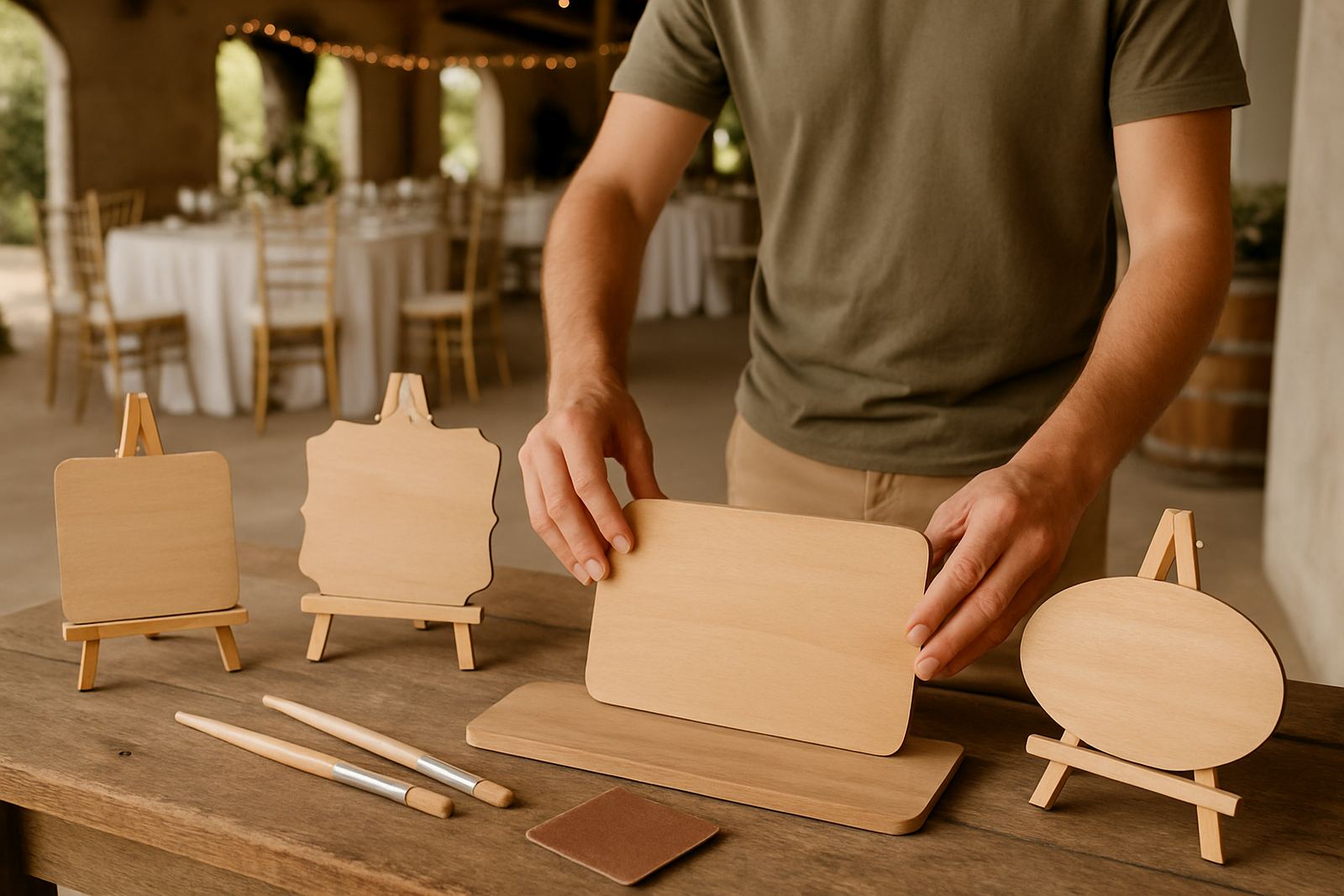
If you are adding stands, hanging hooks or layered bases, tell us how and where each sign will be used. A sign standing on grass needs a different backing than one fixed to a wall or easel. If you are moving pieces between Somerset West and a Cape Town venue, factor in transport and setup too. Some signs travel best in flat packed form, while others should be assembled and packed carefully to avoid damage.
Think about finish, durability and weather
Wood is a strong choice for weddings because it suits both formal and relaxed settings, but the finish must match the conditions. Coastal air around Strand, Gordon's Bay and Hermanus can affect exposed pieces, so sealed edges and careful finishing help. For indoor venues, the main concern is handling and transport, especially if the set is going through several hands before setup.
Our production team checks each piece for clean cuts, smooth edges and stable layers before dispatch. If the set includes multiple elements, ask for prototype samples so you can see the scale and tone before the full order is made. This can save time and money, especially for bulk table sets or repeated event signage. For load-shedding periods or tight wedding schedules, planning the timeline early is important so production, finishing and courier packing all happen on time.
Build your checklist for ordering and setup
Once the style and wording are final, use a checklist to keep the order neat. This helps avoid missed items and makes it easier for the venue team or planner to place everything correctly on the day. Many couples order in batches, starting with the core signs and then adding smaller pieces once the guest count is confirmed.
- Main welcome sign
- Ceremony sign or order of service
- Directional signs for parking, toilets or reception
- Seating chart or table list
- Table numbers or table names
- Bar, gift and guestbook signs
- Any custom cut names or decorative pieces
For weddings in Stellenbosch, Paarl, Cape Town or further away by courier, leave enough room for packing and delivery. A few extra days make a big difference when you want everything to arrive in one piece and ready for the venue team to place without stress.
Keep the set useful after the wedding
A well-made wooden sign set does not have to end after the reception. Smaller pieces can be kept as home décor, nursery décor, or used later in a business or family space. Some couples keep the welcome sign in their home entrance, while table signs and name pieces are stored for anniversaries, guest rooms or event décor later on. If you want the set to have a longer life, mention that during the design stage so the finish and wording can suit more than one use.
For couples and planners across the Western Cape, a practical wedding sign set is about balance: clear wording, matching pieces and a finish that suits the venue. When those parts are planned properly, the signs do more than decorate the day they help everything run smoothly.