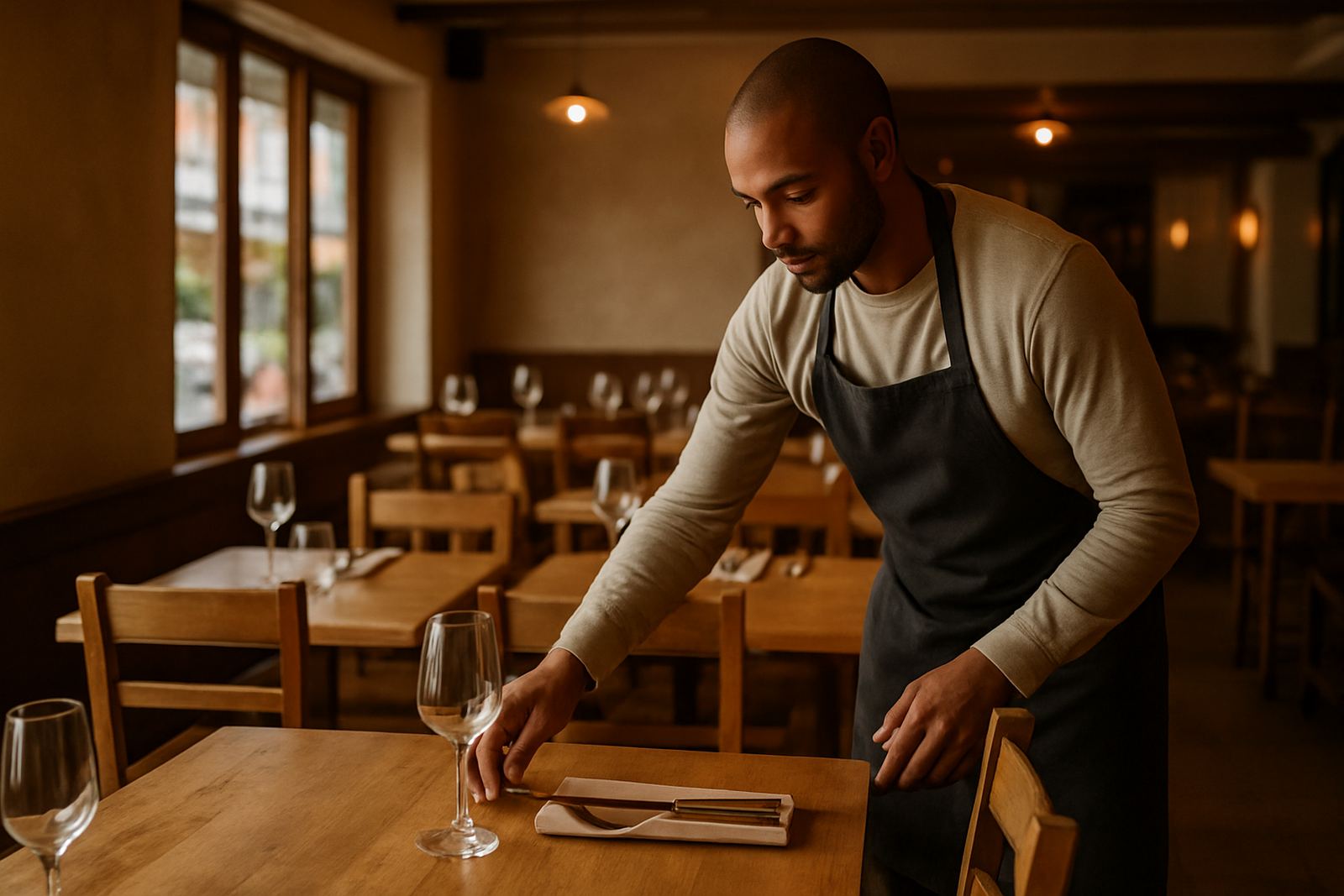
A Sea Point brief built around service flow
The client was a busy restaurant in Sea Point, Cape Town with a clear practical goal: make table ordering easier, keep table numbers easy to read, and reduce the small delays that build up during peak lunch and evening trade. They wanted a set of table signs that looked tidy on the table, matched the room and made sense for both dine-in guests and staff moving quickly between sections.
The brief called for compact QR table signs for ordering, plus numbered markers for front-of-house use. The signs had to sit neatly on narrow tables, stay upright, and remain legible from a seated position. The restaurant also wanted a material that felt warmer than plastic, but still held up to daily handling and frequent cleaning. Sea Point can be humid close to the coast, so the finish had to cope with moisture and not warp too easily.
- Client type: restaurant with dine-in service
- Location: Sea Point, Cape Town
- Use case: QR ordering and table numbering
- Display style: compact, upright, easy to wipe clean
What we had to plan around before cutting
The main constraint was space. These were not large menu boards, they were small table signs that had to work on crowded tables with condiments, cutlery and drinks in the way. Another factor was speed of service. The signs needed to be readable quickly by guests and staff, with no faffing around when a table turned over between covers.
We also had to think about day to day wear. Table signs get moved, stacked, bumped and wiped down with cleaning cloths. In a coastal area like Sea Point, finishes can show wear faster if the material choice is wrong. We therefore kept the build simple and durable, with enough thickness to stand firm and enough contrast for the printed or engraved information to be read without strain.
- Limited table space on smaller restaurant settings
- Frequent handling by staff and customers
- Need for strong legibility at arm's length
- Coastal air and regular cleaning products
The signs we supplied and how they were made
We supplied a set of laser-cut wooden table signs made as neat freestanding pieces. Each sign was sized to keep a low profile while still standing securely. The QR signs were cut with a clean face suitable for scannable artwork, while the numbered markers were kept simple and bold so staff could identify tables at a glance. The final build included careful sanding, finishing and assembly before packing.
For the QR units, we allowed enough flat area for the code and the short instruction line. For the numbered markers, we used clear numerals with enough depth in the cut to remain visible from several angles. The wood gave the set a warmer look than standard plastic holders, and the grain added a natural touch that suited the restaurant interior without fighting it. We worked through a few sample positions before settling the final size, which saved time later on.
The supplied items were finished for everyday hospitality use, with edges smoothed and bases kept stable. The whole job was handled through our Somerset West base, with design, laser cutting, finishing and dispatch managed in-house by the team.
- Laser-cut wooden table signs
- Freestanding QR holders for ordering
- Numbered table markers for front-of-house use
- Sanded, assembled and finished for service conditions
Two-week turnaround from proof to dispatch
The project ran over two weeks from initial brief to final dispatch. Week one covered the artwork layout, size checks and sample review. That stage mattered because the QR placement had to scan properly and the table numbers had to stay readable from a seated guest's eye line. Once the layout was approved, we moved into cutting and finishing.
Week two was for production, final inspection and courier packing. The pieces were checked for balance, surface finish and fit before being wrapped for transit. We kept the timeline tight because the restaurant wanted the signs in place before a busy trading period. Our dispatch process was straightforward and the client received the batch ready for use, without needing extra assembly onsite.
There was also a small practical note here: hospitality teams need things that arrive ready to go, not parts that still need sorting. That is where good planning saves time, and a clean handover keeps service moving from day one.
What changed once the signs were on the tables
Once the table signs were in use, the restaurant had a clearer ordering process and faster table identification. Guests could scan the QR code without asking for help, and staff could call table numbers more easily during busy periods. That reduced the little interruptions that slow down a service shift.
From a visual point of view, the signs also lifted the tables in a practical way. They looked neat, were easy to position, and did not crowd the setting. The client appreciated that the signs were compact enough for smaller tables, yet still clear enough to do the job properly. The result was a more organised front-of-house flow, which is exactly what these pieces are meant to support.
- Clearer guest ordering at the table
- Faster table identification for staff
- Less clutter on small table surfaces
- A tidier look across the dining room
What we would do again for a similar restaurant job
If we were doing a similar Sea Point table sign project again, we would follow the same approach: keep the footprint small, test the reading distance, and make sure the finish suits regular cleaning and coastal conditions. For a hospitality client, that combination matters more than decorative extras.
We would also keep the proofing stage tight. A small change in size or text placement can make a real difference to how the sign works in daily service. For restaurants in Cape Town, Stellenbosch, Paarl or Hermanus, we would usually recommend the same practical checks before production: table size, scan distance, numbering style and how the sign will be stored between shifts. It sounds simple, but those details are what make the final product work well for months, not just on the first day.
That is the kind of project we enjoy, because it is specific, useful and measured. No fuss, just a clean result that helps the team serve better.
Key facts
| Project type | Restaurant table signs and table markers |
|---|---|
| Town | Sea Point, Cape Town |
| Main items | Compact QR table signs and numbered markers |
| Material | Laser-cut wood with sanded and finished surfaces |
| Timeline | 2 weeks from brief to dispatch |
| Use | Dine-in ordering and table identification |