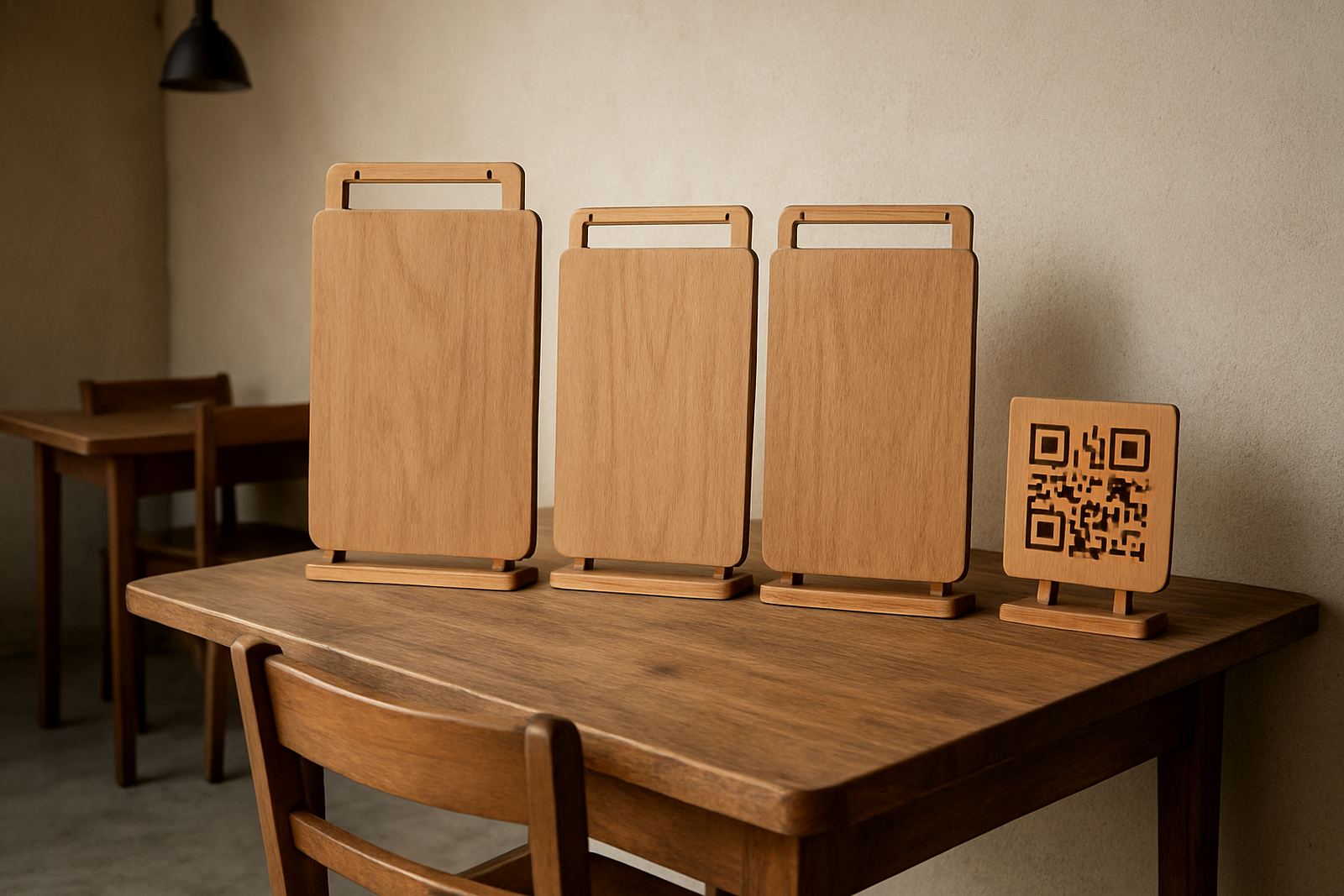

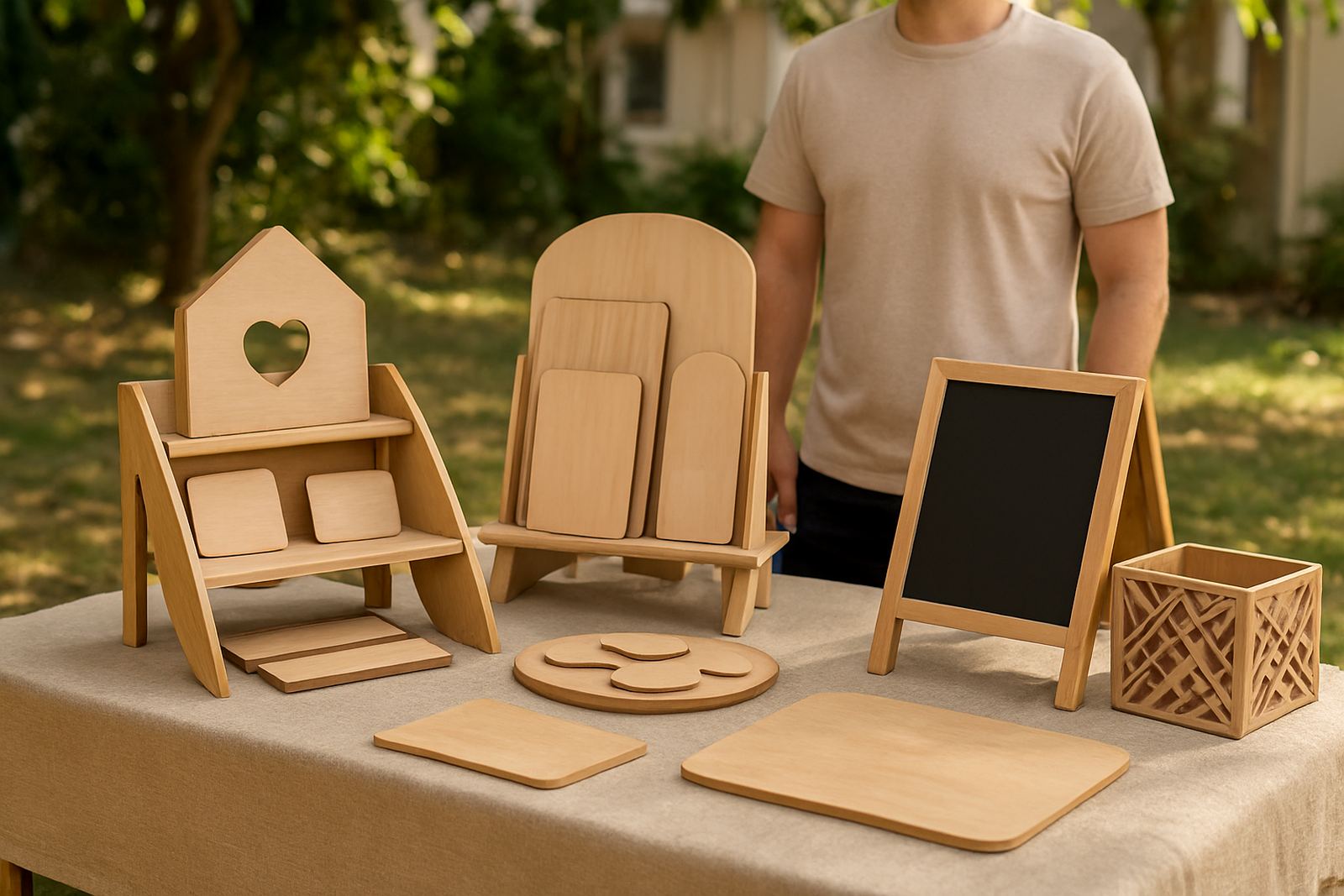
Built for quick set-up at early markets
Market traders need pieces that can go from the bakkie to the table without fuss. A good stall kit usually includes a main name sign, price boards, small product tags, menu boards if you sell food, and a few attention pieces that help buyers spot your stall from the walkway. We make these in lightweight timber so they are easy to move, store and clean between weekends.
For Somerset West, Stellenbosch, Paarl, Cape Town and Hermanus markets, the practical thing is to keep your display readable from 2 to 3 metres away. That means strong lettering, sensible sizes and a finish that holds up in sun, wind and the odd coastal mist. If you trade near the sea, we also plan for humidity so the wood does not warp after a few wet mornings.
A lot of traders also want a setup that feels tidy in a small space. A folded table, crate stack or gazebo front panel can all carry a branded sign if the proportions are right. We can cut pieces to fit your table width, your crate height or your hanging rails so you do not arrive on site and find the sign is too wide for the pitch.
The typical market stall kit we cut and finish
Every trade is different, but there are some common pieces that work well for weekend stalls, food tables and craft stands. We help with one-off items as well as repeat sets for traders who need to restock or add new product lines through the year.
- Main stall sign with your trading name
- Price boards for single products and specials
- Tabletop product labels for jars, candles, preserves or decor
- Directional signs for entrance, payment point or collection area
- Branded tags for packaging, gift bags and takeaway boxes
- Menu boards for food stalls and coffee stands
- Seasonal signs for festive markets and weekend pop-ups
Most clients choose simple natural wood for a warm market look, then add painted lettering, engraved text or layered elements for extra contrast. If you want a cleaner corporate feel for pop-up retail, we can keep the finish pale and minimal. If you want something with more character for handmade goods, we can add depth through layered cuts and detailed engraving.
We also make display pieces for repeat use, like small risers, logo plaques and branded panels that can sit behind products. These help with visibility without taking up much table space, which matters when your stall is already full of stock, bags and payment gear.
How to plan a stall that still works at 4 pm
Good market planning starts with what shoppers need to see first. Your main sign should sit high enough to read above your stock, while prices should be close to the product so buyers do not have to ask for every item. If you sell a wide mix, group the stall by category and use a sign for each group. It keeps the table calm and makes the queue move faster on busy mornings.
Leave space for handling cashless payments, packing and customer flow. A stall that looks full but has no working surface becomes difficult by midday. We often suggest a layout with one central branding piece, one pricing zone, and one clean packing corner. That way, you are not moving items around every 10 minutes or hiding prices behind stock.
For outdoor events, think about shade, wind and transport. Tall signs need stable bases. Hanging signs need a safe fixing point. Flat signs should fit in a crate or zip bag without rubbing against sharp edges. If your market is in a windy spot near Strand or Gordon's Bay, we can advise on weight and mounting so your signage stays put.
One practical tip: keep your lettering simple. Fancy script may look nice on screen, but from a few metres away it can be hard to read when the sun is bright. Clear names, strong contrast and sensible spacing help customers find you faster, and that usually means better trade.
Common mistakes traders make with signage
Many market stalls lose sales because the signs are too small, too busy or placed where nobody can see them. Another common issue is using a single board for everything, then covering it with handwritten price stickers that are hard to read. A proper set of separate signs is easier to update, and it looks better on the table too.
We also see traders choose materials that do not suit outdoor use. Thin cardboard curls in damp weather, while very heavy panels become awkward to carry from the car park. Timber signs with the right thickness usually hit a better balance for regular market use. They feel solid but still travel well.
- Too much text on one board
- Colours that blend into the stock behind them
- Signs that are too low on the table
- No spare price labels for special offers
- Pieces that do not pack flat for transport
- Finishes that mark easily when handled often
If you trade at multiple markets, another mistake is not keeping a consistent look. A stall in Cape Town on Saturday and another in Paarl on Sunday should still feel like the same business. Consistent sign sizes, repeat colours and the same logo treatment help customers recognise you again, which is useful when you build a regular following.
Budget ranges for a market-ready set
The cost depends on size, quantity, finish and how much design work is needed. A simple starter set for a small trader can begin at about R650 to R1,500 for a few basic signs. A more complete setup with a main sign, multiple price boards and some branded accessories often sits between R1,800 and R4,500.
For traders needing layered elements, engraved product panels or a full event kit for a weekend market circuit, budgets commonly range from R4,800 to R9,500. Bulk orders for a franchise, food group or retail team can be quoted separately, especially if you need repeat units for several stalls or different towns.
It helps to think in stages. Start with the pieces that bring the most value, usually the main sign and your highest-traffic price boards. Add smaller labels and decorative pieces once the core setup is working. That keeps the spend under control and lets you test what sells best before ordering more. If you are trading near the coast, it can also be worth choosing a finish that handles moisture well, even if that adds a little to the price.
From Somerset West to weekend markets nationwide
Our Somerset West base supports traders across the Western Cape and further afield by courier. Many clients order for stalls in Stellenbosch, Cape Town, Durbanville, Paarl, Strand, Gordon's Bay and Hermanus, then reuse the same signage for monthly events, seasonal fairs and holiday trade.
The usual process is straightforward. You send through your stall name, logo, colours, sizes and a short note on how you trade. We can then advise on layout, suggest suitable board sizes and prepare the pieces for cutting, engraving, assembly and finishing. If you are not sure what will work, we can start with a sample or a smaller set before you commit to the full order.
For market traders, timing matters. Many stalls need fresh signage before a weekend rush, a festive market or a new product launch. We plan for that by keeping the order clear and practical, then packing each item for safe courier delivery and easy unpacking on site.
When you want your stall to look organised without slowing you down, the right wooden signs make a real difference. They help customers read your offer, remember your name and move from browsing to buying without confusion.