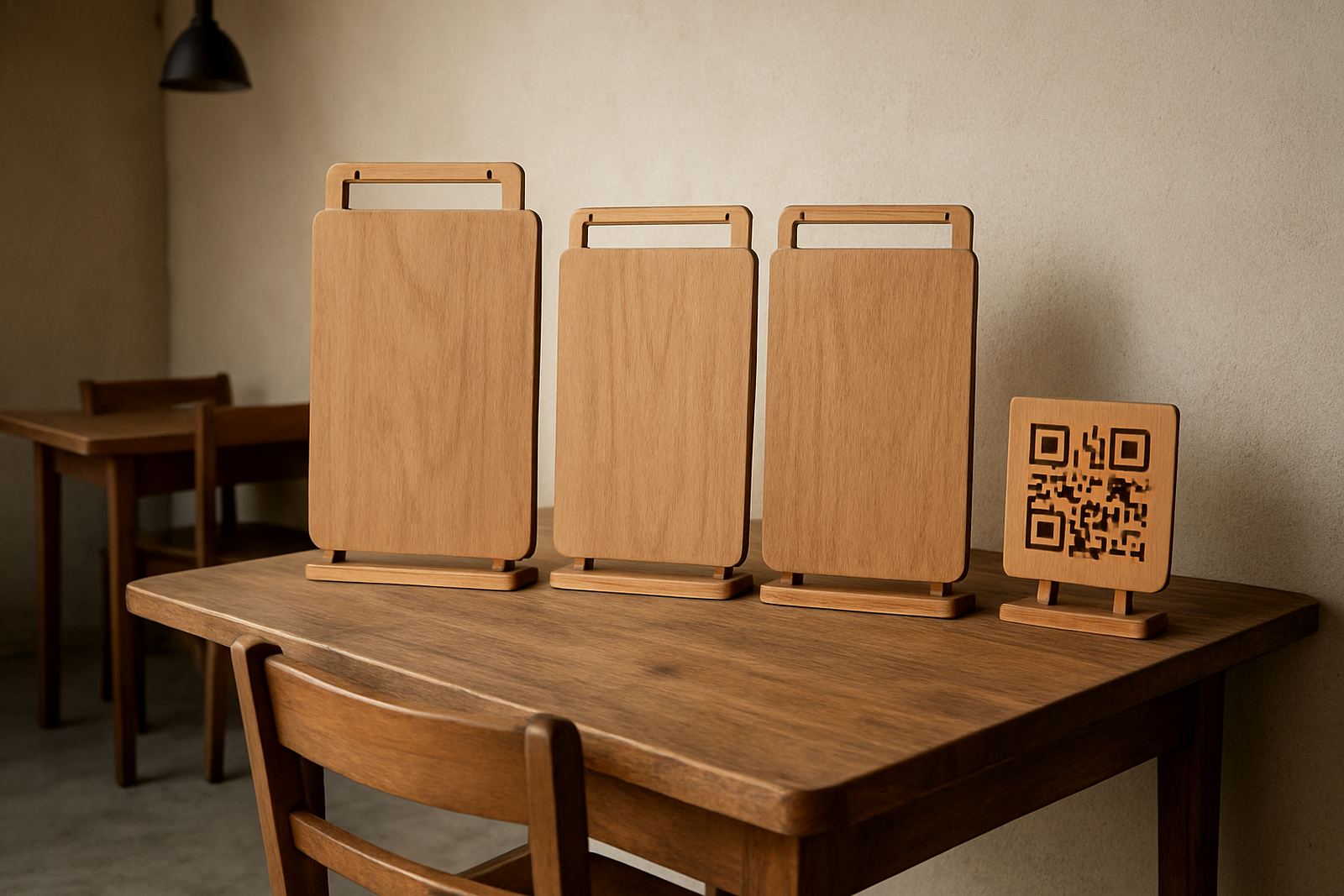
What a Food Venue Usually Needs
Most cafés and restaurants do not need one big sign, they need a small set of pieces that work together. A front counter may need a menu board, a specials sign, a QR code sign, table numbers, reserved markers and a few branded decor items for shelves or wall spaces. In busy service, those details help staff move faster and help customers understand where to order, pay or wait. For venues in coastal towns like Somerset West, Strand and Hermanus, we also look at moisture and salt air when recommending the finish, because timber that is left raw can move or mark faster than expected.
We usually start with the practical side: where guests enter, where they queue, where they sit and what they must read in under five seconds. If the menu changes often, we plan for replaceable inserts or smaller boards that can be updated without remaking everything. If your brand uses a warm, natural look, wood works well for a calm dining room or coffee shop. If the room is busy and loud, clear layout matters more than decorative detail.
- Wooden menu boards for wall or counter use
- QR signs for digital menus and ordering
- Table markers for numbers, reserved or collection status
- Branded wall words, logos and small decor pieces
- Seasonal signs for breakfast, lunch or specials
Choosing the Right Size and Layout
Good planning saves money and keeps the space tidy. A menu board that is too small gets ignored, while one that is too large can make a compact takeaway counter feel crowded. For most cafés, a wall menu between 600 x 900 mm and 900 x 1200 mm is practical, depending on viewing distance. Table markers usually work well at 70 to 120 mm high, while a QR sign needs enough room for the code plus a short line of text so guests know what it is for.
We often help clients map the room before cutting anything. That includes measuring the wall, checking sight lines from the queue, and deciding whether the staff will update prices weekly or monthly. If the venue has a lot of glare from windows in Cape Town or Paarl, matte finishes and darker text can improve readability. If the décor is light and airy, layered wood adds depth without making the space feel heavy. One small note that gets missed often: leave space for cleaning access behind counters, shelves and point of sale areas, because signs that sit too close to equipment become a nuisance very quickly.
- Keep the main menu readable from 2 to 4 metres
- Use one clear font family for all front-of-house signs
- Leave enough blank space so the board does not look cramped
- Match the wood tone to tables, shelving or flooring where possible
- Plan for staff to swap or clean items without removing fixings
Typical Equipment Set for Cafés and Restaurants
A practical set for a small to medium venue often includes a combination of flat-cut text, engraved details and layered pieces. Laser cutting gives clean edges for lettering and logos, while engraving is useful for QR codes, opening hours and product lists. For a restaurant with multiple seating zones, we may make a family of signs so the front door, service counter and tables all carry the same visual style. That way the brand feels consistent without needing expensive printed material everywhere.
For new openings in Somerset West or Gordon's Bay, we often prepare sample pieces first so the owner can check colour, scale and fixings before full production. This is helpful when the final layout is still moving around. It also reduces waste if the menu wording changes. Where the venue expects regular specials, we can split the design into a fixed frame and a changeable insert. That works well for breakfast boards, lunch menus and cocktail lists.
- Laser-cut logo signs for walls or reception points
- Engraved menu boards for fixed items and prices
- QR code signs for self-service ordering or reviews
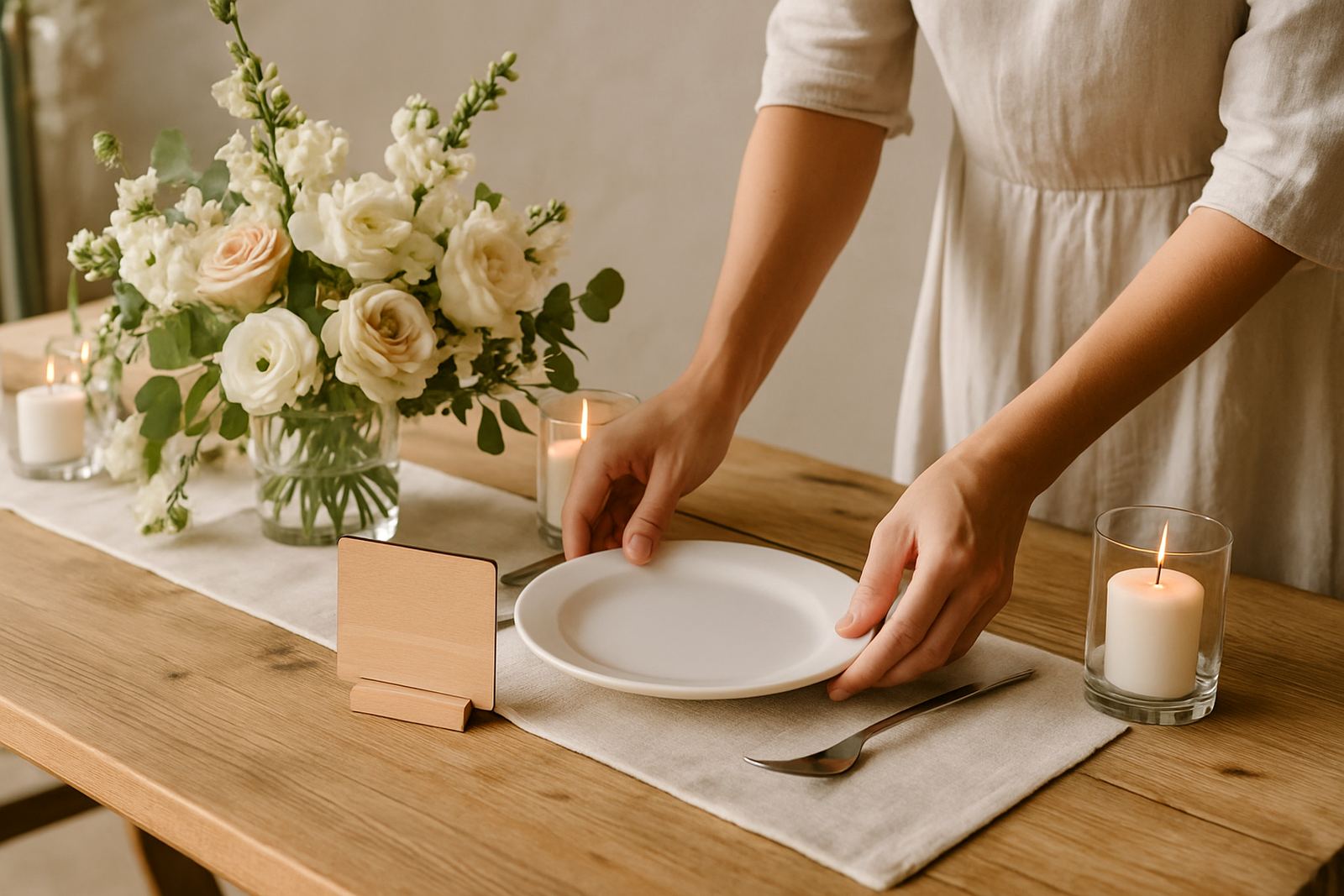
- Table markers for dining rooms, patios and takeaways
- Small directional signs for collection, seating or rest rooms
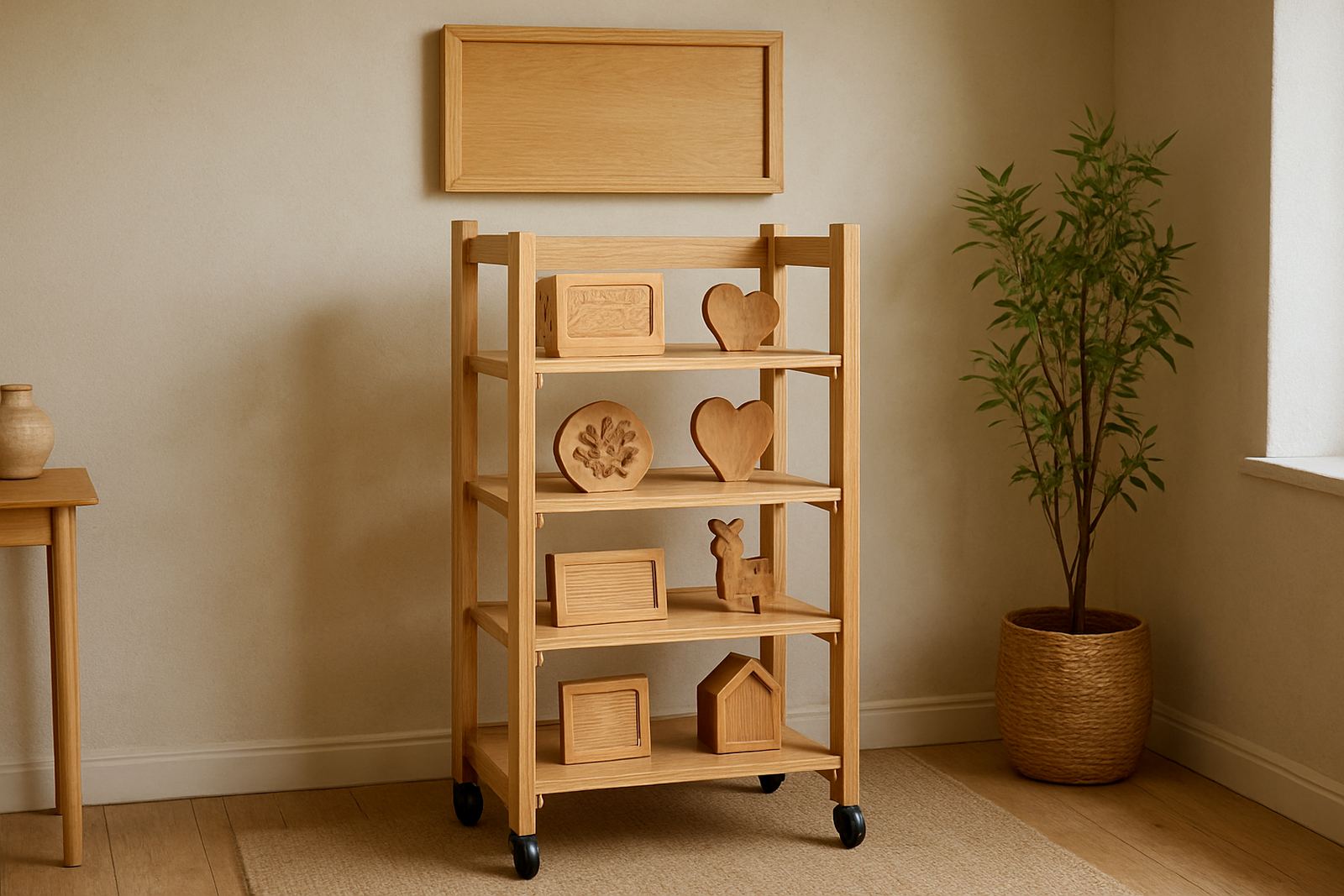
- Branded shelf pieces and display blocks for coffee bars or bakeries
Finishes That Hold Up in Daily Service
Food venues need signs that can handle repeated wiping, minor knocks and constant handling. We usually recommend sealed wood, engraved lettering that will not rub off easily, and finishes that suit the venue’s cleaning routine. In coastal towns like Strand and Hermanus, humidity can affect untreated timber, so a proper finish matters. Inside a dry café in Stellenbosch, the main concern may be UV from shopfront windows, which can fade some surfaces over time. If the sign is near a steam area, coffee machine or wash-up station, the placement should be chosen carefully.
For restaurants with a more polished feel, layered signs can create a nice sense of depth without being flashy. For cafés with a rustic or home-baked style, simpler engraved boards often feel more honest and easy to maintain. The key is to choose the finish for the actual use, not just the look. A sign that photographs well but cannot survive a year of service is poor value.
We also consider power outages and load-shedding when planning any sign that might need nearby lightboxes, illuminated counters or timed displays. A wooden sign that relies less on electronics is often a practical choice for food businesses that want fewer moving parts and lower upkeep.
Common Mistakes We Help Clients Avoid
Food venue signage goes wrong most often when the message is too crowded or the finish is chosen for the photo, not the floor. A menu board with too many price lines becomes hard to read. A QR sign with tiny text gets ignored. Table markers that are too light can be knocked over by staff or customers. Another mistake is mixing three or four different styles across the same room, which makes the venue look untidy even if each item is well made.
We also see owners under-ordering. They buy one sign for the wall and then later realise they need collection markers, reserved signs, toilet direction signs and a small set of shelf pieces for retail items. It is usually cheaper to plan the full set in one round. If the venue has branches in Cape Town, Paarl or Durbanville, it helps to keep the wording and sizes standardised so replacements stay simple.
- Do not overload one board with too much text
- Do not use tiny QR codes or hard-to-read fonts
- Do not mix too many wood tones and styles
- Do not forget cleaning, handling and humidity
- Do not order only the front sign and ignore the rest of the set
Budget Ranges for Wooden Menu and Sign Sets
Budget depends on size, quantity, fixings and whether the work is simple engraving or more detailed layered production. A small set for a coffee counter, such as one menu board, one QR sign and a few table markers, can often start around R1 500 to R3 500. A more complete café set with wall branding, seasonal signs and matching table pieces may sit in the R4 500 to R12 000 range. For larger restaurants or multi-branch groups, bulk order production can bring the per-piece cost down, especially when the artwork and sizes are standardised.
Prototype samples are useful when a venue is opening or refreshing its look, because they let you confirm the scale before committing to a larger run. Assembly and finishing also affect the budget, along with courier packing if the pieces need to travel to Cape Town, Hermanus or further afield. If you are working to a fixed spend, we can help prioritise the pieces that will make the biggest difference first, then add the rest in stages.
Clients usually get the best value by starting with the items guests see every day: the menu, the ordering point and the table markers. Once those are sorted, the decorative pieces can follow. That approach keeps the venue functional from day one and avoids spending money on signs that do not help the service flow.